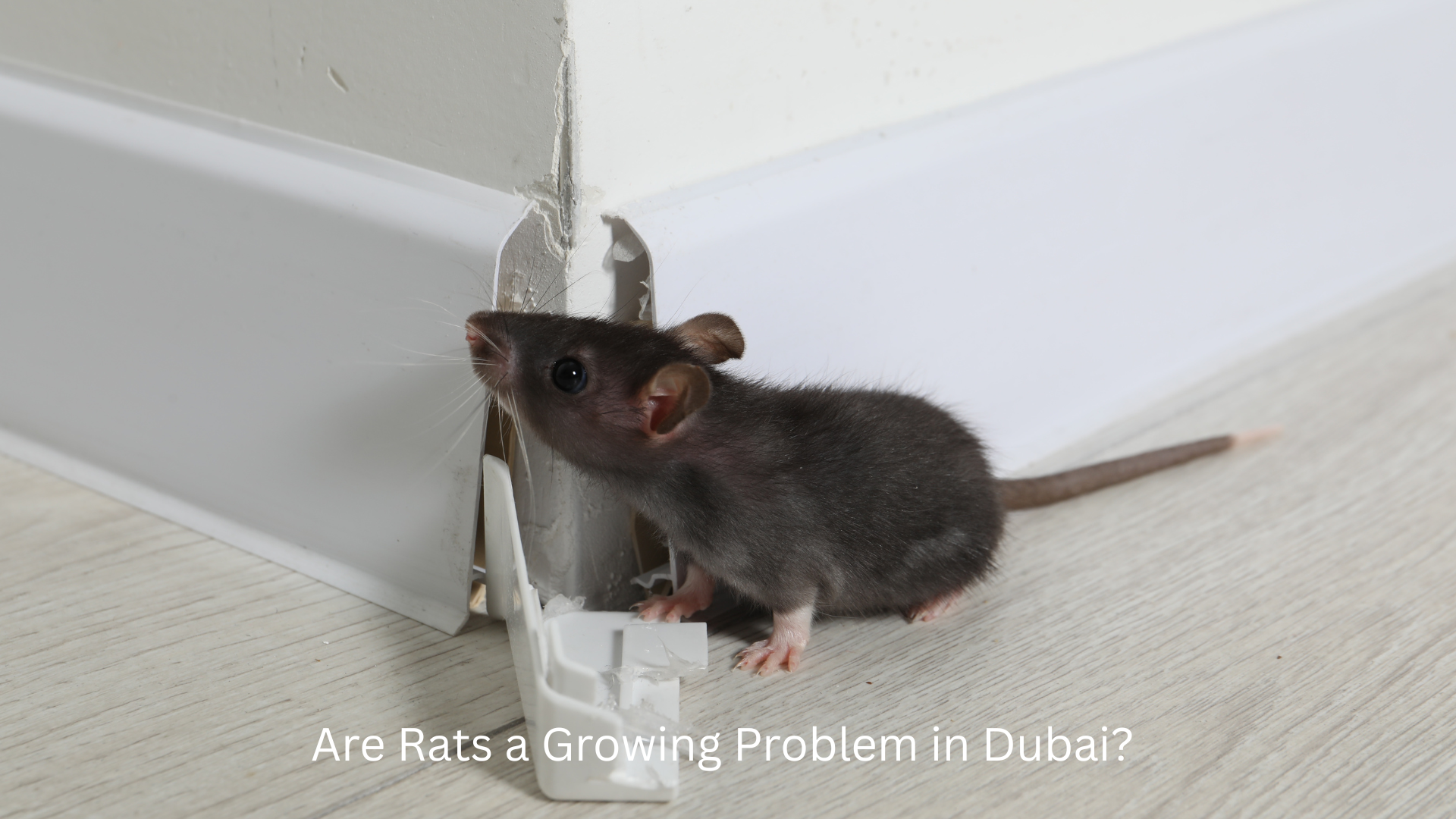
Are Rats a Growing Problem in Dubai? What Residents Need to Know
More residents across Dubai are reporting rat sightings — in apartment car parks, residential gardens, near waste disposal areas, and even inside kitchens. What was once considered a problem limited to industrial zones and older buildings is increasingly being reported in newer residential communities as well.
So is Dubai actually experiencing a rat problem, or does it simply feel that way because of increased awareness and social media discussion? The answer is more nuanced than a simple yes or no — but there are clear, identifiable reasons why rat activity in Dubai has been increasing, and residents who understand these reasons are far better equipped to protect their homes.
This article looks at why rat sightings are increasing across Dubai, which areas and property types are most affected, the health and safety risks involved, and what residents and businesses can do about it.
Why Rat Activity Is Increasing Across Dubai
Several converging factors have created more favourable conditions for rat populations in Dubai over recent years. None of these factors are isolated incidents — they reflect broader changes in how the city is developing and operating.
Rapid Construction and Land Disturbance
Dubai’s construction activity has remained consistently high, with new developments, infrastructure projects, and renovations happening across the city at any given time. Construction work disturbs existing rat burrows and nesting sites — particularly in undeveloped plots, older demolition sites, and areas near drainage and utility works.
When a rat colony’s existing habitat is disturbed by excavation or demolition, the rats don’t disappear — they relocate to the nearest available shelter and food source, which is often a neighbouring residential or commercial building. This is one of the most common explanations for sudden rat appearances in previously unaffected buildings near active construction sites.
Growth of Food Delivery and Waste Volume
Dubai has one of the highest food delivery adoption rates in the world. This convenience has a side effect that’s rarely discussed — a significant increase in food packaging waste, much of which still contains food residue when disposed of. Combined with the sheer volume of restaurants, cafes, and food outlets across the city, waste management areas have become richer and more accessible food sources for rats than ever before.
Communal waste rooms in residential buildings — particularly those that are not regularly cleaned or where bins are left open or overflowing — have become reliable, predictable food sources that allow rat populations to establish and grow within a building’s waste infrastructure.
Drainage and Sewer Networks
Dubai’s extensive drainage and sewer networks provide an interconnected highway system that allows rats — particularly Brown Rats (Norway Rats), which are excellent swimmers — to move between buildings, blocks, and even neighbourhoods undetected. A rat population established in one section of a drainage network can spread to multiple connected properties over time.
Older buildings with ageing drainage infrastructure are particularly vulnerable, as gaps, cracks, and deteriorating pipe joints provide easy entry points from the sewer network directly into the building.
Climate and Seasonal Patterns
Dubai’s hot summer months push rats toward shaded, cooler, and water-accessible areas — often meaning buildings with irrigation systems, basements, and parking structures. Rat sightings tend to increase noticeably during the hottest months as rodents seek shelter from extreme outdoor temperatures, and again during the cooler months when breeding activity peaks.
Which Areas and Properties Are Most Affected?
While rats can be found across Dubai, certain property types and locations report higher levels of activity:
- Older buildings in Deira and Bur Dubai — ageing infrastructure, established drainage networks, and dense commercial activity create ideal conditions for established rat populations.
- Properties near active construction sites — across rapidly developing areas, buildings adjacent to ongoing excavation or demolition work report increased rat activity as displaced colonies relocate.
- Buildings with communal waste rooms — apartment blocks where waste rooms are not regularly maintained or where bins are not properly sealed are particularly vulnerable.
- Villas with gardens and irrigation — Al Qusais, Mirdif, Jumeirah, and similar villa communities provide ground-level access, vegetation cover, and water sources that attract rats, particularly Roof Rats (Black Rats) which are skilled climbers.
- Ground-floor and basement units — properties with direct or near-direct access to drainage systems, parking structures, or storage areas face higher exposure to rat entry points.
- Restaurants and food businesses — any property handling food waste is at elevated risk, particularly in older commercial buildings in Al Qusais Industrial Area, Deira, and similar zones.
Why Rat Problems Get Worse Quickly
One of the most important things for Dubai residents to understand is how quickly a small rat sighting can escalate into a serious infestation. Rats are prolific breeders — a single female rat can produce 5 to 10 litters per year, with up to 14 pups per litter. Under the right conditions, a single breeding pair can theoretically be responsible for over 1,000 descendants within a year.
This means a “single rat” sighting is rarely an isolated event. By the time a rat is seen during daylight hours — when rats typically avoid activity — there is usually an established population already present, simply going unnoticed because rats are naturally cautious and primarily nocturnal.
Additionally, rats are highly adaptable. They can fit through gaps as small as a coin, chew through most building materials including wood, plaster, and some plastics, and quickly learn to avoid traps and baits that have been used incorrectly — making amateur DIY attempts not just ineffective, but counterproductive, as rats that survive an encounter with a poorly placed trap become “bait shy” and avoid similar traps in future.
The Health and Safety Risks of Rats in Dubai Homes
Rats present risks that go well beyond the discomfort of seeing one in your home. Understanding these risks is important for taking the problem seriously rather than dismissing it as a minor nuisance.
Disease Transmission
Rats are known carriers of several diseases that can affect humans, including leptospirosis, salmonella, and hantavirus. These can be transmitted through direct contact with rat droppings, urine, or nesting materials, as well as through contamination of food and food preparation surfaces. In humid environments, dried rat urine can become airborne and inhaled, posing a respiratory risk.
Fire Hazards from Electrical Damage
Rats — particularly Roof Rats (Black Rats) — frequently gnaw on electrical wiring as part of their natural behaviour to keep their teeth from overgrowing. In Dubai, where extensive air conditioning systems mean significant electrical wiring runs through ceilings, walls, and roof spaces, rat damage to wiring is a recognised fire risk in residential and commercial buildings.
Structural and Property Damage
Beyond wiring, rats can damage insulation, water pipes, stored goods, furniture, and building materials through their constant gnawing and nesting activity. In commercial properties, rat damage to stock, packaging, and storage areas can result in significant financial losses beyond the cost of pest control itself.
Compliance Risk for Businesses
For restaurants, hotels, and food retail businesses, rat activity represents a serious compliance issue under Dubai Municipality food safety regulations. Evidence of rodent activity during an inspection can result in penalties, and in severe cases, temporary closure until the issue is resolved.
Signs You May Have a Rat Problem
Because rats are nocturnal and naturally cautious around humans, you’re far more likely to notice signs of their presence than the rats themselves. Look out for:
- Droppings — dark, pellet-shaped droppings around 10–20mm long, often found near food storage areas, behind appliances, or along walls.
- Gnaw marks — on food packaging, furniture, wiring, skirting boards, and door frames.
- Grease marks — dark, greasy smears along walls and skirting boards where rats repeatedly travel along the same routes.
- Scratching or scurrying noises — particularly at night, coming from ceilings, wall cavities, or under floors.
- Burrows or holes — in garden areas, near building foundations, or around drainage points.
- A strong, musky odour — particularly noticeable in enclosed spaces like cupboards, storage rooms, or roof spaces with an active infestation.
What Dubai Residents Can Do to Protect Their Homes
While professional treatment is essential once an infestation is identified, there are practical steps residents and businesses can take to reduce the risk of rats establishing themselves in the first place:
Seal Entry Points
Rats can squeeze through surprisingly small gaps. Check and seal gaps around pipes, vents, door thresholds, and any cracks in external walls — particularly at ground level and around utility penetrations.
Manage Waste Properly
Ensure waste bins have secure, properly fitting lids, and that communal waste areas are not left with overflowing bags or exposed food waste. For buildings, this often requires coordination with management or facilities teams to ensure waste rooms are cleaned regularly.
Remove Outdoor Food Sources
For villa owners, avoid leaving pet food outdoors overnight, ensure fallen fruit from garden trees is cleared regularly, and store any animal feed in rodent-proof containers.
Maintain Drainage and Plumbing
Report any unusual gaps, cracks, or deterioration around drainage pipes and access points to building management promptly. These are common entry points for rats moving through sewer and drainage networks.
Don’t Rely on DIY Solutions Alone
Over-the-counter traps and baits can sometimes catch individual rats, but they rarely address an established population, and incorrect placement can make rats trap-shy — making professional treatment more difficult later. If you’ve noticed any of the signs above, a professional inspection from a Dubai Municipality certified provider is the most reliable way to assess the scale of the problem and apply the right solution. Visit byebug.ae/rat-control/ to learn more about our rat control process.
Noticed Signs of Rats in Your Property?
ByeBug offers free rat inspections across all Dubai areas. Our Dubai Municipality certified technicians identify entry points, nesting areas, and provide a complete rat control plan using bait stations, trapping, and proofing — with transparent pricing and no obligation.
Get a Free Inspection TodayFrequently Asked Questions
Is it common to see rats in Dubai apartments?
Rat sightings have become increasingly reported across residential buildings in Dubai, particularly in older buildings, properties near construction sites, and buildings with poorly maintained waste areas. While not every building is affected, the conditions that attract rats — food waste, drainage access, and construction disturbance — are widespread across the city.
What time of year are rats most active in Dubai?
Rat activity tends to increase during the hottest summer months, as rats seek cooler, shaded areas with access to water — often meaning a move toward buildings. Activity also increases during the cooler months when breeding rates rise. In practice, this means rat activity in Dubai can occur year-round, with noticeable peaks during seasonal transitions.
Can one rat sighting mean a bigger infestation?
Yes. Rats are primarily nocturnal and naturally avoid human contact, so a daytime sighting often indicates that a larger population is already established and the rats are being forced into more visible activity due to overcrowding or disturbance. A single sighting should always be treated as a signal to investigate further, not dismissed as an isolated event.
How much does rat control cost in Dubai?
Costs depend on the property size, the extent of the infestation, and the treatment methods required — such as bait stations, trapping, drain treatment, or proofing work. ByeBug offers free inspections and transparent pricing before any work begins. Contact us at byebug.ae/rat-control/ for a no-obligation quote.
The Bottom Line
Rats are not a new phenomenon in Dubai, but the combination of ongoing construction, growing food waste volumes, ageing drainage infrastructure in older areas, and seasonal climate patterns means rat activity has been increasingly reported across residential and commercial properties throughout the city.
The good news is that rat problems are highly manageable when addressed early. Recognising the signs, taking sensible preventative steps, and acting quickly when activity is suspected makes the difference between a minor issue resolved in a single visit and a larger infestation that takes weeks to fully eliminate.
If you’ve noticed any signs of rat activity in your Dubai home or business, book a free inspection with ByeBug at byebug.ae/rat-control/ — early action is always the most cost-effective approach.