10 Signs You Have Rats or Mice in Your Dubai Home
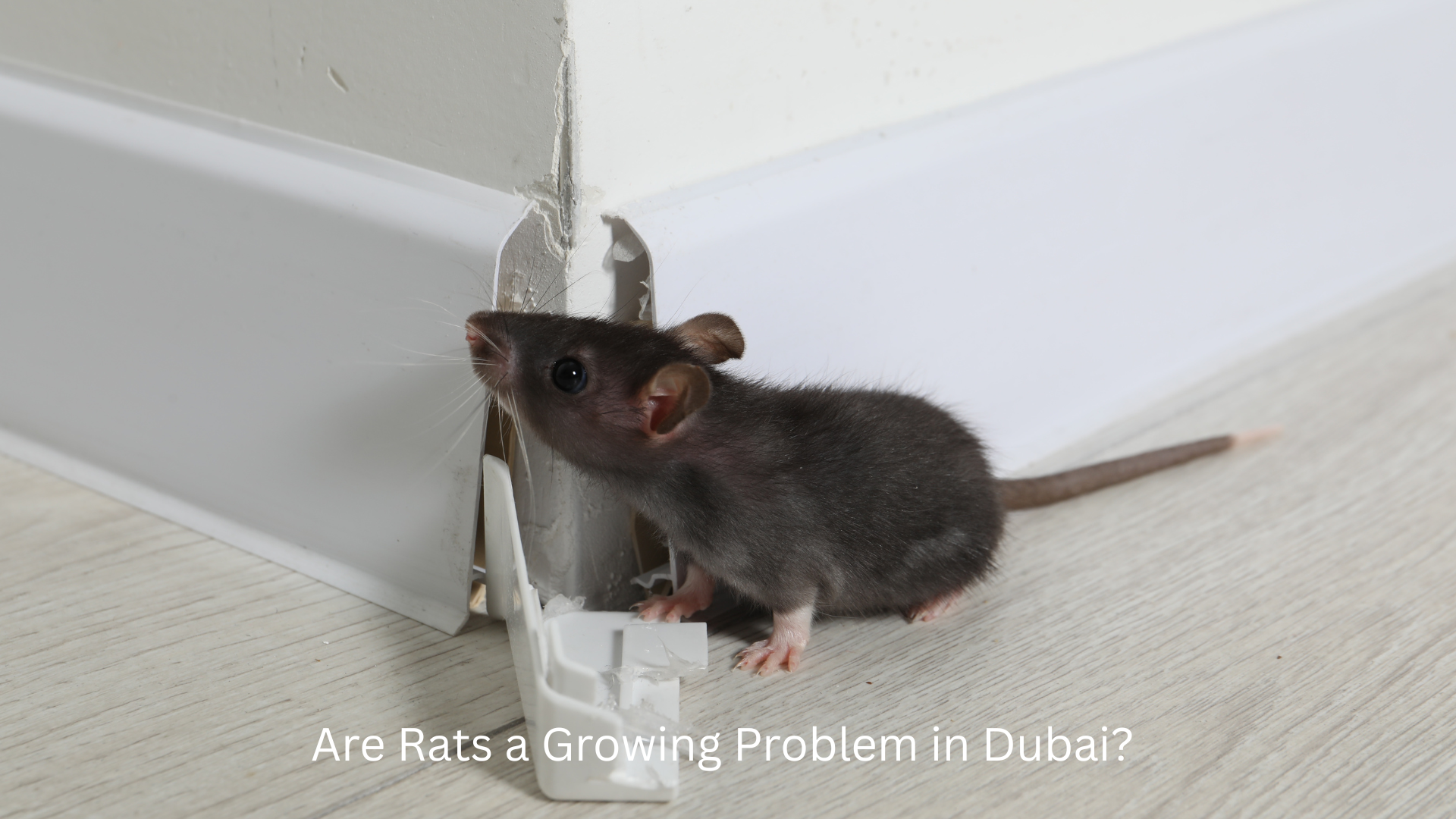
Rats and mice are among the most secretive pests in Dubai. Unlike cockroaches or ants — which you are likely to spot in your kitchen — rodents are nocturnal, naturally cautious around humans, and highly skilled at staying hidden inside wall cavities, ceilings, under floors, and behind large appliances. Most Dubai residents with a rodent problem have no idea until the infestation is well established.
This makes knowing the signs critical. Rodents leave behind a trail of evidence long before they are seen directly — and identifying that evidence early is the difference between a straightforward professional treatment and a large, complex infestation requiring multiple visits.
Here are the 10 signs that confirm rats or mice are present in your Dubai home — and what each one tells you about the scale of the problem.
1. Droppings in Kitchen Cabinets, Drawers, or Along Walls
Rodent droppings are the single most reliable early indicator of a rat or mouse infestation. They are almost always the first sign residents notice — often discovered when opening a rarely-used kitchen cabinet or cleaning behind appliances.
Rat droppings are dark brown or black, pellet-shaped, and approximately 10–20mm long — roughly the size of a large raisin. Mouse droppings are significantly smaller at 3–6mm, pointed at both ends, and resemble dark grains of rice.
The quantity and distribution of droppings tells you a great deal about the infestation. Fresh droppings are dark and moist — older ones are dry and grey. A large number of droppings in multiple locations indicates an established, active infestation. A few droppings in one location may indicate early-stage activity or a lone rodent scouting the area.
Where to check: inside kitchen cabinets, along skirting boards, behind the fridge and oven, inside drawers, and in storage areas.
2. Gnaw Marks on Food Packaging, Cables, or Furniture
Rodents have teeth that grow continuously throughout their lives — and they gnaw constantly to keep them from overgrowing. This means that almost everything in your home is a potential gnawing target, from food packaging and wooden furniture to electrical cables and structural materials.
Gnaw marks on food packaging are typically the easiest to spot — look for irregular holes or chewed edges on cereal boxes, bread bags, rice sacks, and similar packaging. Gnaw marks on electrical cables are the most dangerous — rats chewing through wiring inside wall cavities and ceiling spaces is a recognised fire risk in Dubai residential buildings.
You can tell rat gnaw marks from mouse gnaw marks by size — rat gnaw marks are larger (approximately 4mm wide) while mouse gnaw marks are smaller and neater (approximately 1–2mm). Fresh gnaw marks are pale in colour and become darker as they age.
3. Scratching or Scurrying Sounds at Night
Rodents are nocturnal — their peak activity occurs between midnight and dawn, when your home is quiet and still. Scratching, scurrying, and occasional squeaking sounds coming from inside walls, ceilings, or under floors at night are one of the clearest indicators of rodent activity in Dubai apartments and villas.
The location of the sounds gives you important information about the species. Scratching from ceiling spaces and roof areas suggests Roof Rats (Black Rats) — skilled climbers that nest in upper building areas. Sounds from wall cavities at ground level or under floors suggest Brown Rats (Norway Rats) — burrowing rodents that travel through drainage and lower building infrastructure.
Mouse sounds are lighter and faster than rat sounds — a rapid pattering rather than the heavier thud of a large rat moving across a ceiling void.
4. Grease Marks Along Walls and Skirting Boards
Rats have poor eyesight and navigate primarily by touch, using their whiskers and body to follow the same routes along walls and structural edges repeatedly. Their fur, which carries grease and dirt from their nesting areas, leaves dark smear marks along these regular travel routes — particularly at ground level along walls, skirting boards, and around pipe penetrations.
These grease marks appear as dark, irregular smudges on painted walls, skirting boards, and around holes or gaps where rats enter and exit. They are particularly visible on lighter-coloured walls and tend to accumulate at the points where rats squeeze through tight gaps.
Grease marks are a strong indicator of established, long-term rodent activity along a specific route — meaning the infestation is not new and has been active for some time. Mice also produce grease marks but they are lighter and harder to detect.
5. Burrows or Holes Near Building Foundations or Garden Areas
Brown Rats are prolific burrowers. In Dubai villas and ground-floor properties, rat burrows appear as smooth, oval-shaped holes — typically 6–9cm in diameter — near building foundations, garden boundary walls, under decking, around compost areas, and near drainage points.
Active burrows have a clean, smooth entrance with fresh soil scattered nearby. Inactive burrows collect debris and leaf litter inside the entrance. A cluster of multiple burrows indicates an established colony — Brown Rat colonies often contain 50–200 individuals sharing a connected burrow system.
In Dubai apartment buildings, the equivalent of burrows are gaps and holes around drainage pipes, utility penetrations, and cable entries at ground and basement level — these are the entry points Brown Rats use to move from the drainage network into the building.
6. A Strong, Musky or Ammonia-Like Smell
Rodents produce a distinctive, persistent musky or ammonia-like smell — caused by their urine, which they deposit continuously along their travel routes and in nesting areas. In small infestations, the smell may only be noticeable in enclosed spaces like under-sink cabinets, inside wardrobes, or in storage rooms where rodents are nesting.
In larger, established infestations, the smell becomes noticeable throughout the affected area — particularly in the morning when overnight rodent activity has been at its highest. The smell is often stronger in wall cavities, ceiling voids, and storage areas where nesting material has accumulated.
If you have thoroughly cleaned an area and the smell persists despite cleaning, rodents nesting inside the structure — rather than on accessible surfaces — are likely the source. Dead rodents inside wall cavities also produce a distinctive, unpleasant odour.
7. Nesting Material in Hidden Areas
Rats and mice build nests from shredded soft material — paper, fabric, insulation, cardboard, and similar materials. Finding shredded material gathered into a loose ball or compact nest in hidden areas of your home is a clear sign of active rodent nesting.
Common nesting locations in Dubai homes include: inside the insulation behind the back of the fridge or freezer, in gaps behind kitchen cabinets, inside storage boxes left undisturbed in spare rooms, inside wall cavities accessible through small gaps, in ceiling insulation above false ceilings, and under large appliances that are rarely moved.
Mice tend to build neater, more compact nests than rats and often use finer shredded material. Rat nests are larger and bulkier. The presence of a nest — particularly one with droppings nearby — indicates an active, established colony using that location as a regular resting and breeding site.
8. Pets Behaving Strangely — Fixating on Walls or Appliances
Cats and dogs have significantly more sensitive hearing and smell than humans — and will often detect rodent activity long before any visible signs appear. Unusual pet behaviour is one of the earliest indicators of a rodent presence in your home.
Warning behaviours to watch for include: a cat or dog fixating intensely on a specific section of wall, floor, or appliance for extended periods; pawing or scratching at skirting boards; sniffing persistently along the base of walls; or appearing alert and agitated at night for no obvious reason.
If your pet is repeatedly drawn to the same location — particularly in the kitchen, utility room, or near a wall cavity — it is worth investigating that area carefully for other signs of rodent activity. Pets rarely fixate on empty spaces for extended periods without reason.
9. Tracks or Footprints in Dusty Areas
In dusty storage areas, rarely-used rooms, or building areas with accumulated dust — such as above false ceilings, inside storage cupboards, or in basement and parking level utility areas — rodent footprints and tail drag marks are sometimes visible along regular travel routes.
Rat footprints are 2–3cm wide with four toes on the front feet and five on the back, leaving a distinctive alternating track pattern. Mouse footprints are much smaller — approximately 1cm — and lighter, often barely visible unless the surface is heavily dusty.
A simple way to check for tracks in a suspected area is to spread a thin layer of flour or talcum powder on the floor overnight and check for prints in the morning. This is particularly useful in storage rooms, under kitchen units, and in utility areas where you suspect activity but have not found other visible signs.
10. A Daytime Rat Sighting
This is the most unambiguous sign of all — and also one of the most serious. Rats are strongly nocturnal and avoid human contact. A rat seen during daylight hours — in your kitchen, living space, garden, or building common areas — almost always indicates that the population has grown large enough to force younger or lower-ranking colony members out into the open during daylight hours.
In other words, a daytime sighting does not mean you have one rat — it almost certainly means you have many. By the time rats are visible during the day, the infestation has typically been established for weeks or months and the colony has grown to a size that creates internal competition for food and nesting space.
A single daytime sighting is sufficient reason to book a professional inspection immediately. Do not wait to see a second one.
Rats vs Mice — How to Tell the Difference
The signs above apply to both rats and mice, but the treatment approach differs by species. Here’s a quick comparison:
The signs above apply to both rats and mice, but the treatment approach differs by species. Here’s a quick comparison:
| Feature | 🐀 Rat | 🐭 Mouse |
|---|---|---|
| Droppings | 10–20mm, blunt ends | 3–6mm, pointed ends |
| Size | Large (25–50cm with tail) | Small (15–20cm with tail) |
| Gnaw marks | Large, jagged (4mm+) | Small, neat (1–2mm) |
| Sounds | Heavier thud / scratching | Light rapid pattering |
| Nesting | Bulky, in lower areas | Compact, higher areas |
| Entry gaps | Coin-sized (20mm+) | Pencil-sized (6mm+) |
| Treatment | Bait stations + proofing | Trapping + gel bait |
Not sure which rodent you have? ByeBug technicians identify the exact species during your free inspection before recommending any treatment.
What to Do If You Spot Any of These Signs
If you have identified one or more of these signs in your Dubai home, here is the right course of action:
Do not use DIY traps and bait as your only solution
Over-the-counter snap traps and poison bait blocks can catch individual rodents but rarely address an established population. Worse, rodents that encounter a poorly placed trap or survive a bait encounter can become trap-shy and bait-averse — significantly complicating professional treatment later.
Do not block entry points before treatment
It is tempting to seal gaps and holes as soon as you find them — but blocking entry points before professional treatment traps rodents inside the building, where they die in wall cavities and create a serious odour problem. Entry points should be sealed by a professional after the infestation has been fully eliminated.
Book a professional inspection immediately
A professional rat inspection by a Dubai Municipality certified technician will confirm the species, identify all active entry points and nesting areas, assess the infestation scale, and provide a targeted treatment plan. ByeBug offers free inspections across all Dubai areas — visit byebug.ae/rat-control/ or call +971 50 510 0340.
Spotted Signs of Rats or Mice in Your Dubai Home?
ByeBug offers free rat and rodent inspections across all Dubai areas. Our Dubai Municipality certified technicians identify the species, locate entry points and nesting areas, and provide a complete elimination plan using professional bait stations, trapping, and proofing.
Get a Free Inspection TodayFrequently Asked Questions
How do I know if I have rats or mice?
The easiest way to tell is by the droppings. Rat droppings are 10–20mm long with blunt ends — roughly the size of an olive stone. Mouse droppings are 3–6mm with pointed ends, similar in size to a grain of rice. Gnaw marks, sounds, and burrow size also differ significantly between the two species as outlined in the comparison table above.
Is one rat sighting enough to call a professional?
Yes — particularly if the sighting was during daylight hours. Rats are nocturnal and avoid humans, so a daytime sighting strongly indicates an overcrowded colony. Even a single sighting at night warrants a professional inspection, as rats are rarely alone — where there is one, there are almost always more.
Can rats enter Dubai apartments through the drains?
Yes. Brown Rats are strong swimmers and are known to enter buildings through drainage systems — particularly in older Dubai buildings where drain infrastructure has gaps or deterioration. A missing or damaged drain cover in a bathroom or kitchen floor drain provides a direct entry route from the building’s drainage network into your apartment.
How quickly can a rat infestation grow?
Extremely fast. A female rat can produce 5–10 litters per year with up to 14 pups per litter. In Dubai’s warm year-round climate — where there is no cold season to slow breeding — a small infestation can grow into a large population within 2–3 months. This is why acting on the first signs is so important.
The Bottom Line
Rats and mice in Dubai homes leave behind clear evidence — droppings, gnaw marks, grease trails, sounds, and smells — long before most residents realise they have a problem. Knowing these 10 signs means you can identify a rodent infestation at the earliest possible stage, when it is smallest and easiest to eliminate.
The key difference between a minor problem resolved in one professional visit and a major infestation requiring weeks of treatment almost always comes down to how quickly the signs were recognised and acted on. If you have spotted any of the signs above, do not wait — book a free inspection with ByeBug today.
Visit byebug.ae/rat-control/ to book your free inspection across all Dubai areas.
About ByeBug Pest Control: ByeBug is a Dubai Municipality certified pest control company providing professional rat control, cockroach, ant, termite, bed bug, and fly control services across Dubai. Free inspections available for all residential and commercial properties.