Why Bed Bugs Are So Common in Dubai
If you’ve woken up with unexplained bites, noticed small rust-coloured stains on your bedding, or spotted tiny dark insects on your mattress seams — you may already be dealing with one of the most difficult pests to eliminate. Bed bugs in Dubai are significantly more common than most residents realise, and the city’s unique characteristics make it one of the highest-risk environments for infestations in the entire region.
Unlike cockroaches or ants, bed bugs have nothing to do with cleanliness or the quality of your home. They are equal-opportunity hitchhikers that infest five-star hotel rooms just as readily as budget apartments. Understanding why bed bugs are so prevalent in Dubai is the first step toward protecting yourself, your family, and your home.
This article explains the specific reasons Dubai has become a high-risk city for bed bug infestations — and what you can do if you suspect you have a problem.
1. Dubai Is One of the World’s Busiest Travel Hubs
Dubai International Airport is consistently ranked among the busiest international airports in the world by passenger volume, welcoming tens of millions of travellers every year from virtually every country on earth. This extraordinary level of global connectivity is wonderful for business and tourism — but it is also the single biggest reason why bed bugs are so common in Dubai.
Bed bugs are expert hitchhikers. They do not jump or fly — instead, they crawl into luggage, clothing, laptop bags, and personal belongings while a traveller sleeps in an infested room. When that traveller boards a flight and arrives in Dubai, the bed bugs arrive with them — completely undetected.
With millions of travellers passing through Dubai every month, the constant flow of luggage and personal items from countries with high bed bug prevalence — including the United States, France, the United Kingdom, and parts of Asia — means the city is continuously re-exposed to bed bug introductions. Even a single infested suitcase placed on a hotel room bed is enough to start a new infestation.
2. Dubai’s Hotel Industry Creates Rapid Spread
Dubai has over 140,000 hotel rooms across hundreds of properties — from budget accommodation in Deira to ultra-luxury resorts on Palm Jumeirah. Hotels are the primary environment in which bed bugs spread between travellers. A guest who checks in with bed bugs in their luggage can leave an infestation behind that affects dozens of subsequent guests before the problem is detected.
Even the most reputable hotels face bed bug challenges. Bed bugs are small enough to hide in mattress seams, headboard crevices, behind wall sockets, and inside bedside table joints — locations that standard housekeeping routines do not typically inspect. A room can appear completely clean to the eye while harbouring an active infestation.
Guests who encounter bed bugs in Dubai hotels frequently bring them home without realising — placing infested luggage on their bedroom floor or bed and unknowingly transferring bed bugs from the hotel to their residence. This is one of the most common ways bed bug infestations begin in Dubai apartments and villas.
3. High-Density Apartment Living Accelerates Spread
A large proportion of Dubai’s residential population lives in high-density apartment buildings — particularly in areas like JLT, Dubai Marina, Business Bay, International City, and Al Qusais. This type of housing accelerates bed bug spread significantly.
Bed bugs travel between apartments through shared walls, electrical conduits, plumbing gaps, and via hallways and lifts. A single infested unit in a building can spread to multiple neighbouring apartments within months. In buildings with high tenant turnover — common in Dubai’s rental market — infested furniture or belongings left behind by departing tenants can introduce bed bugs to the next occupants.
This creates a cycle that is difficult to break without coordinated treatment across affected units. Treating one apartment while neighbouring units remain infested leads to rapid re-infestation — even when the initial treatment was completely successful.
4. Second-Hand and Gifted Furniture Is a Major Source
Dubai has a large and active second-hand furniture market, driven partly by the city’s high expat turnover rate. When residents leave Dubai, they frequently sell or give away furniture — mattresses, sofas, bed frames, wardrobes, and armchairs — to neighbours, colleagues, or through online marketplaces.
Upholstered and wooden furniture is a prime bed bug habitat. Mattresses, sofa cushions, and bed frame joints are among the most common hiding places for bed bugs and their eggs. Accepting or purchasing second-hand furniture in Dubai without proper inspection is one of the highest-risk activities for introducing bed bugs into a previously unaffected home.
This is particularly relevant in Dubai’s furnished apartment market, where tenants move into properties that include furniture from previous occupants — furniture that may have been in the apartment through multiple previous tenancies and several sets of residents.
5. Dubai’s Warm Climate Supports Year-Round Activity
In many countries, pest populations slow significantly during winter months. Cold temperatures reduce breeding rates and activity levels, giving pest control treatments more time to take effect. Dubai has no such advantage.
The city’s consistently warm indoor temperatures — air-conditioned interiors are maintained at 20–24°C year-round — create a permanently ideal environment for bed bug reproduction. Bed bugs breed most efficiently between 21°C and 32°C. In Dubai, that temperature range exists inside virtually every bedroom in the city for 12 months of the year.
This means a bed bug infestation in Dubai that would take 6–8 months to develop in a colder climate can reach the same population density in just 8–12 weeks. A small number of bed bugs introduced in January will be a significant infestation by March if left untreated.
6. High Expat Turnover Means Constant New Introductions
Dubai’s population is approximately 90% expatriate — and the city has one of the highest population turnover rates of any major city in the world. People move to Dubai from countries all over the world, bringing their belongings with them. People leave Dubai and sell or donate their possessions.
Every incoming resident represents a potential new bed bug introduction — whether through infested belongings shipped from abroad, luggage used during the relocation process, or second-hand furniture purchased upon arrival. Every departing resident represents a potential transfer of bed bugs to whoever takes over their apartment or purchases their furniture.
This constant population churn means Dubai’s residential housing stock is continuously cycling through new occupants — creating far more opportunities for bed bug introduction than in cities with more stable, long-term residential populations.
7. Bed Bugs Are Increasingly Resistant to Common Pesticides
Over the past two decades, bed bug populations globally have developed significant resistance to many of the insecticides commonly found in supermarket sprays and DIY products. This pesticide resistance is one of the main reasons bed bug infestations have surged worldwide since the early 2000s — and Dubai is no exception.
When Dubai residents discover bed bugs and attempt to treat them with over-the-counter sprays, the results are almost always disappointing. The sprays may kill some adult bed bugs on direct contact but leave the majority of the population — eggs, nymphs hidden deep in furniture joints, and adults that have developed resistance — completely unaffected.
Failed DIY treatment attempts often make the problem worse. Disturbing the bed bug population with ineffective sprays can cause them to scatter from their established hiding spots to new areas of the property — spreading the infestation from one bedroom to multiple rooms.
How to Know If You Have Bed Bugs in Dubai
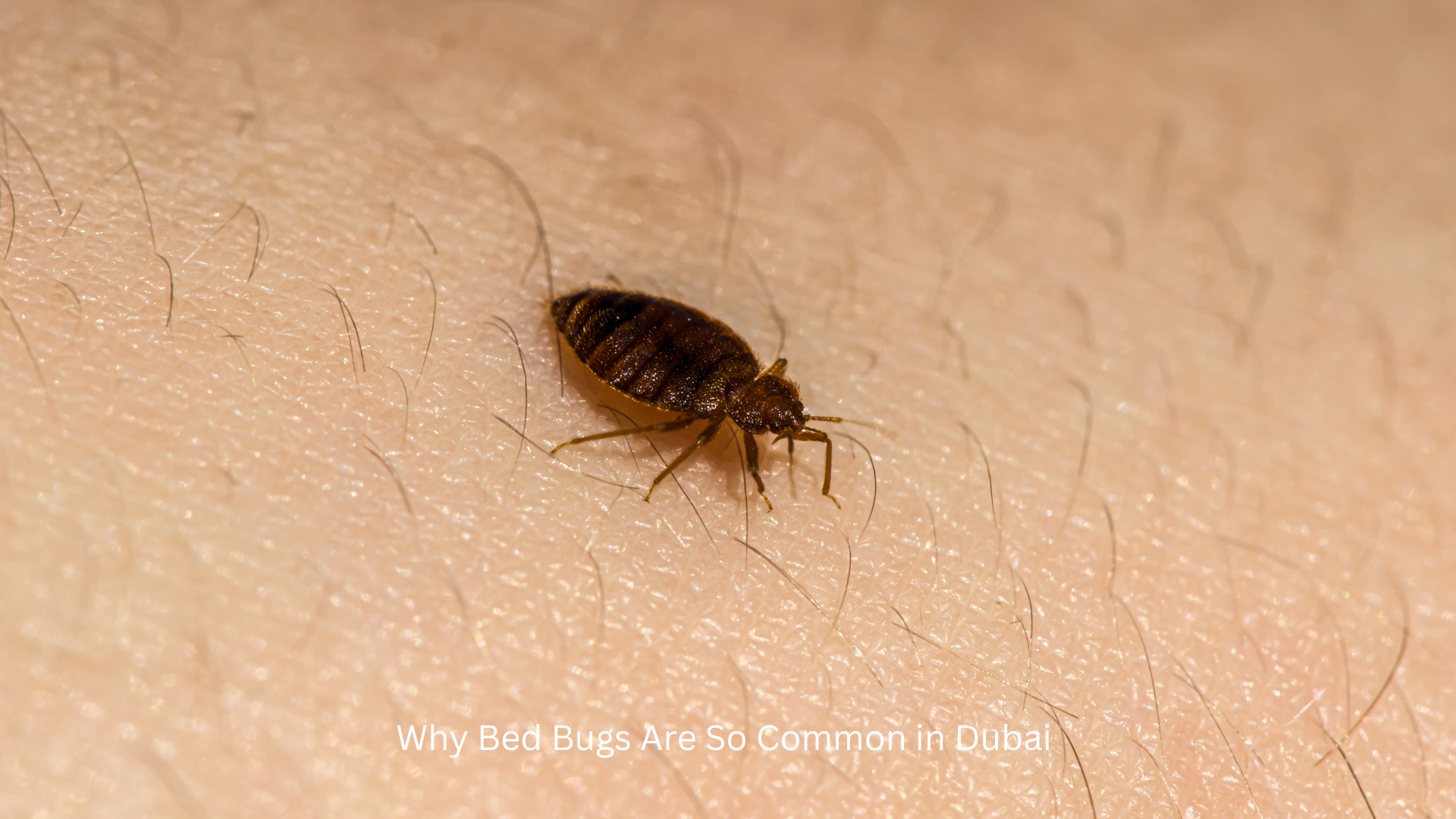
Bed bugs are small — adult bed bugs are approximately 5mm long, roughly the size of an apple seed — but they leave behind clear signs if you know what to look for:
- Itchy bite marks — typically appearing in lines or clusters on the arms, legs, neck, and torso. Bites are not felt during sleep as bed bugs inject a mild anaesthetic while feeding.
- Small rust-coloured or dark stains on bedding — caused by bed bug droppings or blood spots from crushed bugs.
- Tiny white eggs or shed skins on mattress seams, bed frame joints, or headboard crevices.
- A faint, sweet, musty odour in the bedroom — noticeable in larger infestations.
- Live bed bugs — reddish-brown, flat, oval insects visible on the mattress, behind headboards, or inside furniture joints.
- Bloodstains on your pillow or sheets — caused by bed bugs being accidentally crushed during sleep after feeding.
What to Do If You Have Bed Bugs in Dubai
If you’ve identified any of the signs above, here is what you should do — and what you should avoid:
Do not panic — but do act quickly
Bed bugs are not dangerous in the medical sense — they do not transmit disease. But they cause significant sleep disruption, psychological stress, and skin reactions, and small infestations become large infestations very quickly in Dubai’s warm indoor climate. Acting within days of suspecting an infestation is critical.
Do not move furniture or belongings to other rooms
A common mistake is moving a mattress, sofa, or bedding to another room after discovering bed bugs. This almost always spreads the infestation to a previously unaffected area. Keep all items in place until a professional inspection has been carried out.
Do not rely on DIY sprays
As explained above, most over-the-counter products are ineffective against resistant bed bug populations and do not kill eggs. Using them before a professional inspection can scatter the infestation and make treatment harder. Professional-grade heat treatment, steam, and residual insecticides are the only methods proven to eliminate all life stages.
Book a professional inspection immediately
A professional bed bug inspection by a Dubai Municipality certified technician will confirm the infestation, assess its extent, identify all affected areas, and recommend the most effective treatment method for your property. ByeBug offers free bed bug inspections across Dubai — visit byebug.ae/bed-bugs-removal/ or call +971 50 510 0340 to book.
How to Protect Yourself From Bed Bugs in Dubai
Given how common bed bugs are in Dubai, prevention is as important as treatment. Here are the most effective precautions for Dubai residents:
- After hotel stays in Dubai or abroad — inspect your luggage before bringing it into your bedroom. Leave bags in the hallway or bathroom and check seams and pockets for any signs of bed bugs.
- When moving into a furnished apartment in Dubai — inspect the mattress, bed frame, sofa, and any upholstered furniture thoroughly before sleeping in the property.
- Avoid placing luggage on hotel beds or carpeted floors — use the luggage rack provided, which keeps bags away from the most common bed bug hiding spots.
- Be cautious with second-hand furniture — inspect any used mattress, sofa, or bed frame carefully before bringing it into your home. When in doubt, decline.
- Use mattress encasements — protective covers that seal the entire mattress and box spring eliminate the most common bed bug hiding spots and make future inspections much easier.
- Report suspected bed bugs to your building management immediately — in Dubai apartment buildings, early reporting and coordinated treatment is the only way to prevent building-wide spread.
Suspect Bed Bugs in Your Dubai Home?
ByeBug offers free bed bug inspections across all Dubai areas. Our Dubai Municipality certified technicians use heat, steam, and professional-grade chemical treatments to eliminate bed bugs at every life stage — adults, nymphs, and eggs.
Get a Free Inspection TodayFrequently Asked Questions
Can bed bugs live in Dubai’s hot outdoor climate?
Bed bugs cannot survive in Dubai’s extreme outdoor heat — temperatures above 45°C kill them rapidly. However, they thrive in air-conditioned indoor environments which maintain the 21–28°C range that bed bugs prefer. All Dubai homes, hotels, and offices provide year-round ideal conditions for bed bug survival and reproduction.
How long can bed bugs survive without feeding in Dubai?
In Dubai’s air-conditioned indoor climate, bed bugs can survive 6–12 months without a blood meal. This is why leaving an apartment empty does not eliminate an infestation — returning residents or new tenants will find the bed bugs waiting for them. Professional treatment is the only way to eliminate them.
Are bed bugs common in Dubai hotels?
Bed bugs have been reported in hotels across all categories in Dubai — from budget properties in Deira to luxury hotels on Sheikh Zayed Road and Palm Jumeirah. No hotel is immune. The volume of international guests passing through Dubai’s hospitality sector means all hotels face continuous re-exposure risk regardless of their cleanliness standards.
How much does bed bug treatment cost in Dubai?
Treatment costs depend on the property size, infestation level, and treatment method required. ByeBug offers free inspections and provides transparent pricing before any work begins. Contact us at byebug.ae/bed-bugs-removal/ for a no-obligation quote.
The Bottom Line
Bed bugs are common in Dubai for a combination of reasons that are largely unique to the city — its status as a global travel hub, its large hotel industry, its high-density residential buildings, its high expat turnover, and its warm year-round indoor climate. None of these factors are going to change, which means bed bug vigilance is simply a permanent part of living in Dubai.
The good news is that bed bugs, unlike termites, do not cause structural damage, and a professional bed bug treatment carried out early can resolve most infestations in a single visit. The key is acting quickly at the first sign of a problem — before the infestation spreads to other rooms or neighbouring apartments. If you suspect bed bugs in your Dubai home or have recently returned from a hotel stay and noticed bites, book a free inspection with ByeBug at byebug.ae/bed-bugs-removal/ — the sooner the better.